Customers
  • Logistics
  • Music
  • Gaming
About usTeamLet's talk

Let's talk about your next project.

+47 950 70 713

Company

  • Customers
  • About us
  • Team
  • Contact us

Industry

  • Logistics
  • Music
  • Gaming

Others

  • CSR
  • IntegrationNEW
  • Privacy Policy
  • Terms of Use

Newsletter

Get notified with our newsletter.

Org Nr: 932 985 934

AI summary

2026 Copyright Avinto. All Rights Reserved

Let's talk about your next project.

+47 950 70 713

Company

  • Customers
  • About us
  • Team
  • Contact us

Industry

  • Logistics
  • Music
  • Gaming

Others

  • CSR
  • IntegrationNEW
  • Privacy Policy
  • Terms of Use
AI summary

Newsletter

Get notified with our newsletter.

Org Nr: 932 985 934

2026 Copyright Avinto. All Rights Reserved

CustomersPitch Quest

Pitch Quest

Pitch Quest is a narrative-driven music education game that teaches melody, harmony, and rhythm through three mini-games, framed around a story of a girl inheriting an apartment and working toward a concert performance.

0+

Student users

0+

Schools

About Musikkspill AS

Musikkspill AS develops engaging digital tools that make music theory and ear training enjoyable, effective, and motivating. By combining game-based learning with carefully designed practice, we help students build strong musical skills through frequent, meaningful repetition.


Musikkspill
About Musikkspill AS

The Ask

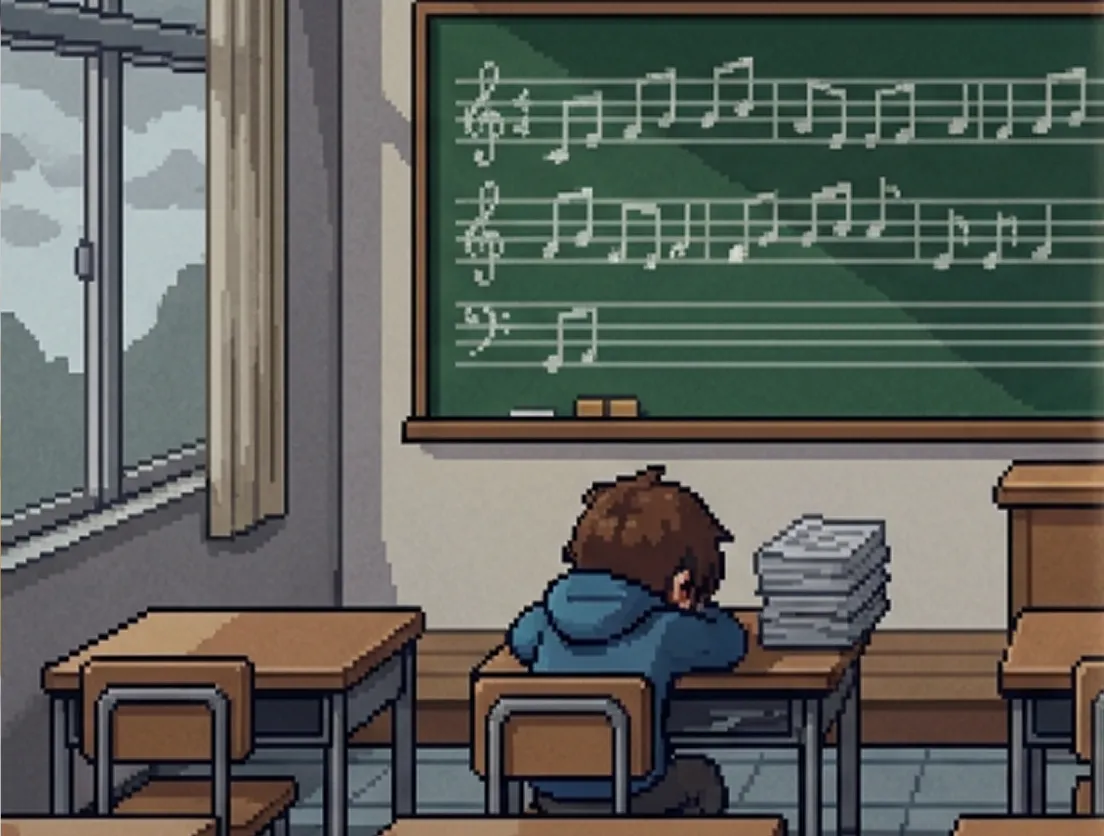
Music theory is usually taught the way it's always been taught: notation on a board, scales repeated until they stick, a curriculum built around rules to memorize rather than a sound to chase. The clients wanted something different, a way to teach the same fundamentals- rhythm, ear training, harmony- without the class feeling like homework.
The Ask

The Build

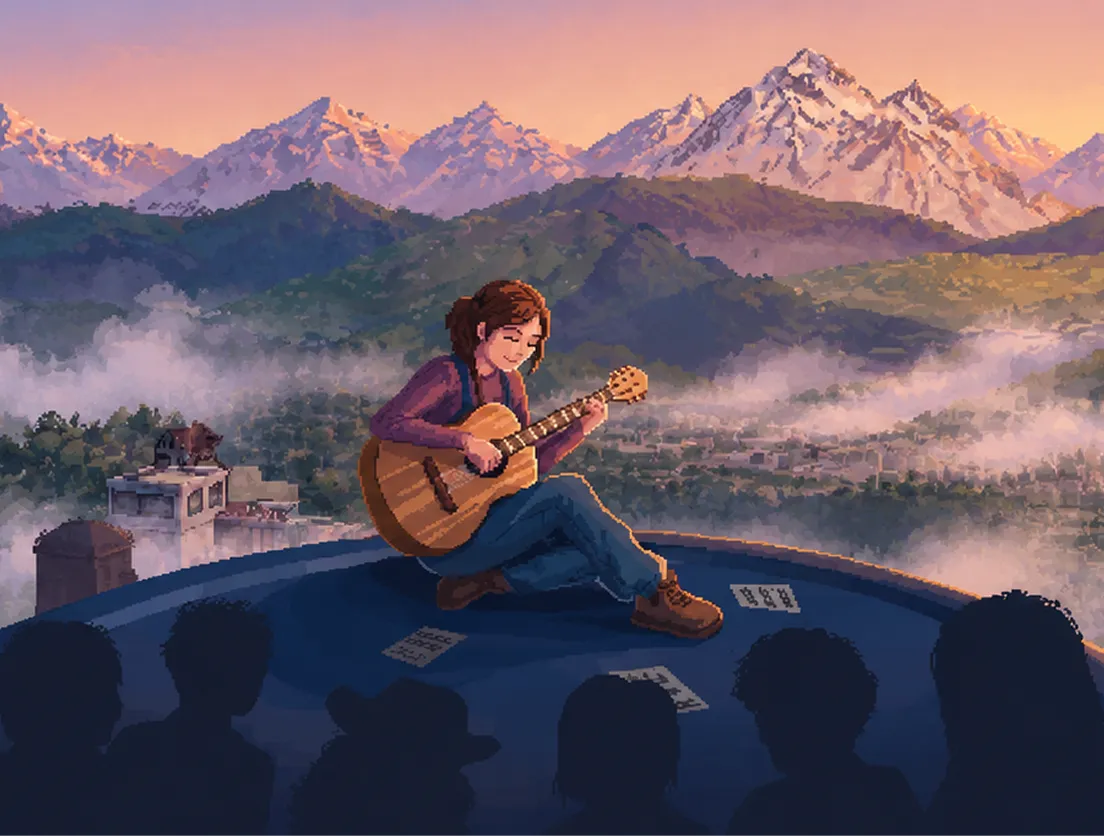
So instead of a curriculum with a game bolted on, we built a story with the curriculum hidden inside it. Every rhythm exercise, every ear-training moment, sits inside a place, a person, and a reason to keep playing, so the learning never announces itself as learning. What follows is that story, and the three challenges presented through games and levels.
The Build

The Story of Pitch Quest

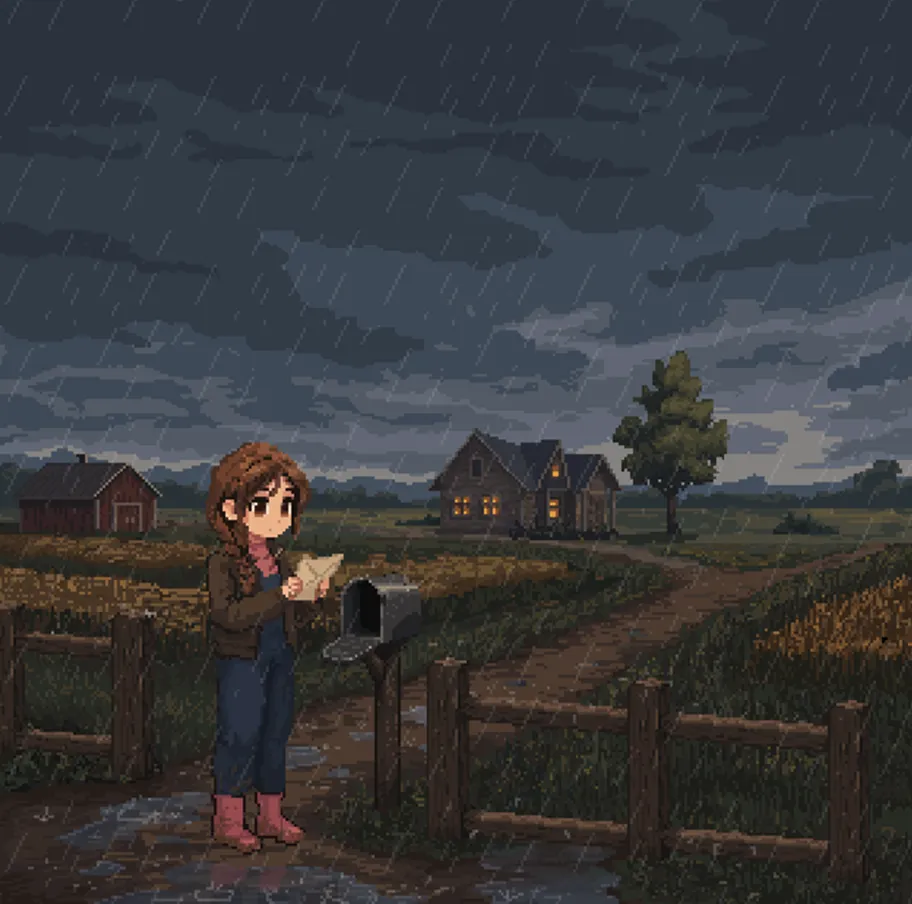
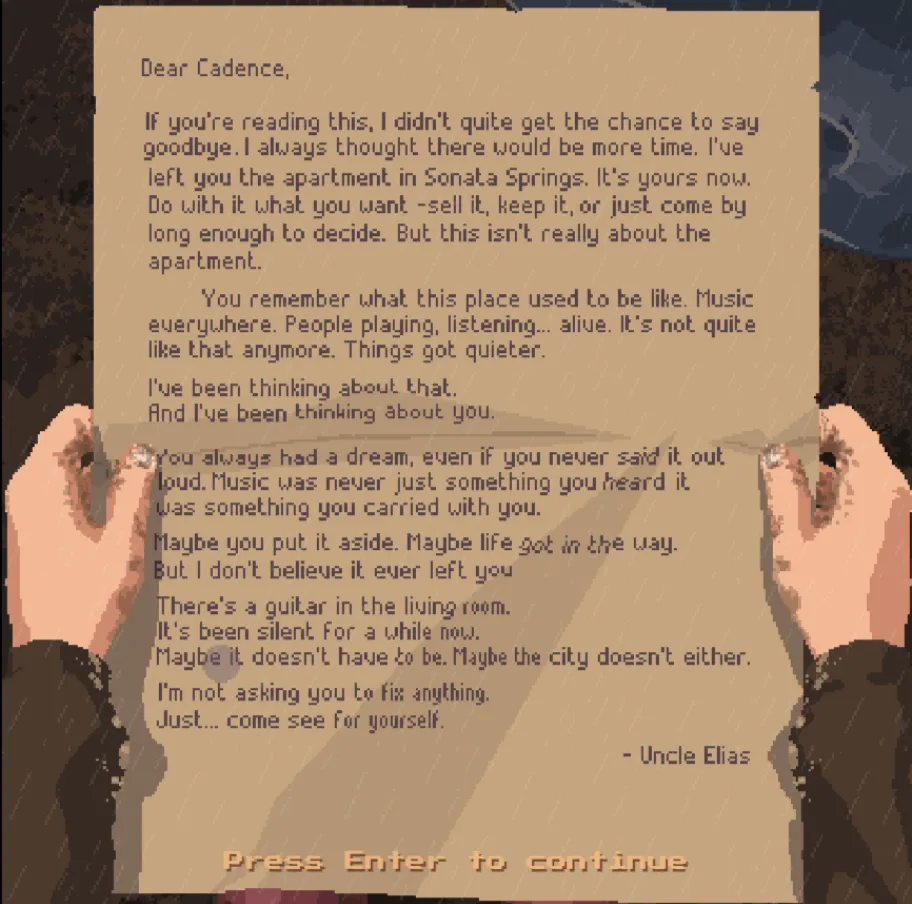
It starts with a letter. Cadence never expected to hear from her uncle Elias again, and certainly not like this. He's gone now, and what he's left behind isn't a fortune; it's an address. An apartment. A town she's never set foot in.
The Story of Pitch Quest

A Town Waiting to Be Earned

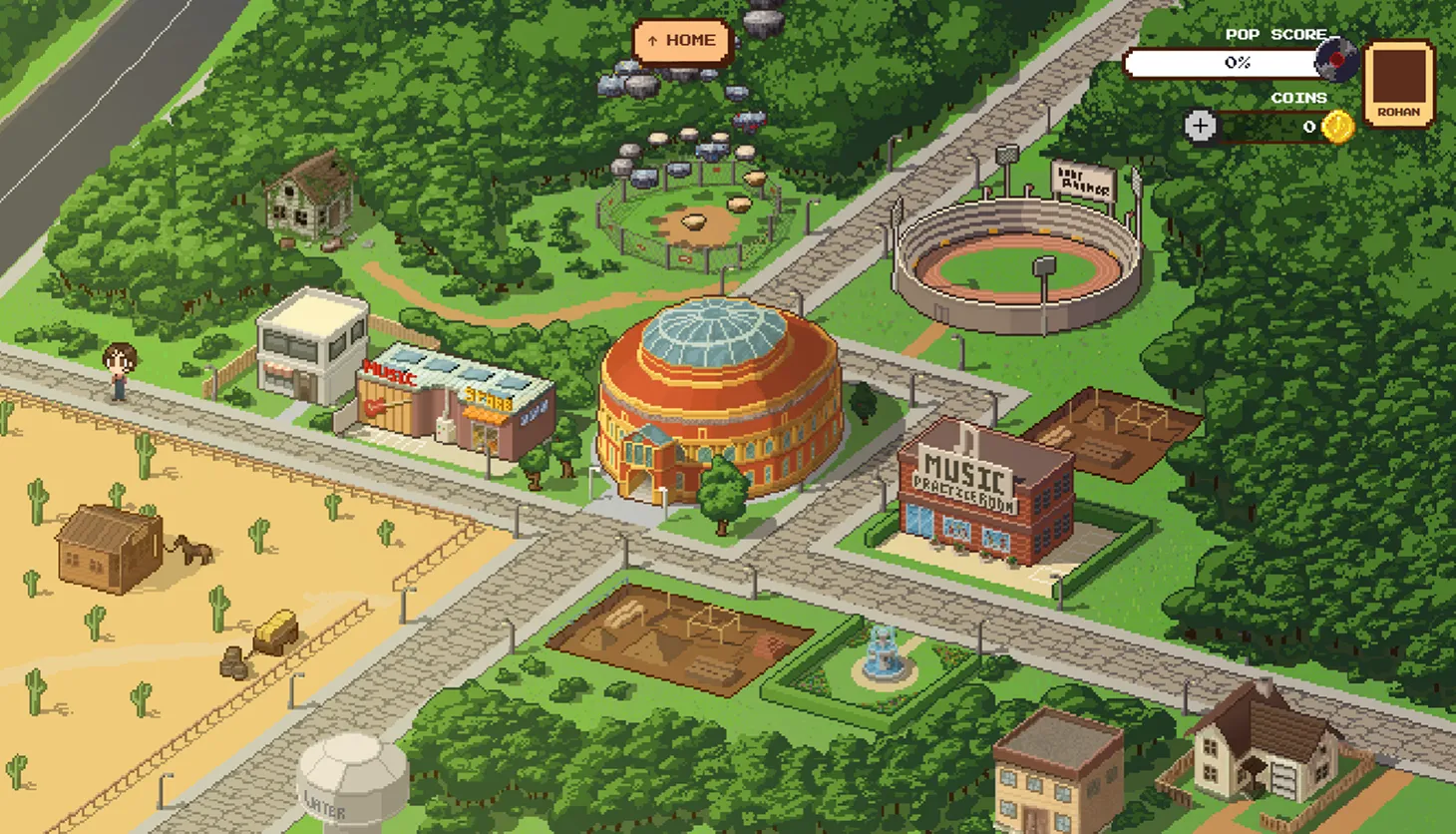
The town is called Sonata Springs, and it doesn't take long for Cadence to realize her uncle didn't leave her an ordinary inheritance. The apartment is quiet, mostly empty, the kind of place that hints at a life once lived in it without actually holding onto any of it anymore. Whatever Elias earned, whatever he was proud of, it's gone now, and the walls stay bare until Cadence earns her own reasons to fill them. Down the street, a music store sells instruments worth saving up for, some common, some rare enough to feel earned. Further in, a practice room where a band starts coming together, one rehearsal at a time. And past all of it, tucked out of sight and wrapped in rumor, a haunted house nobody in town will explain.

At the center of it all stands the Royal Concert Hall, the town's proudest stage, reserved for the best Sonata Springs has ever produced, and, maybe, for her.

The Games

Beat Runner

Beat Runner

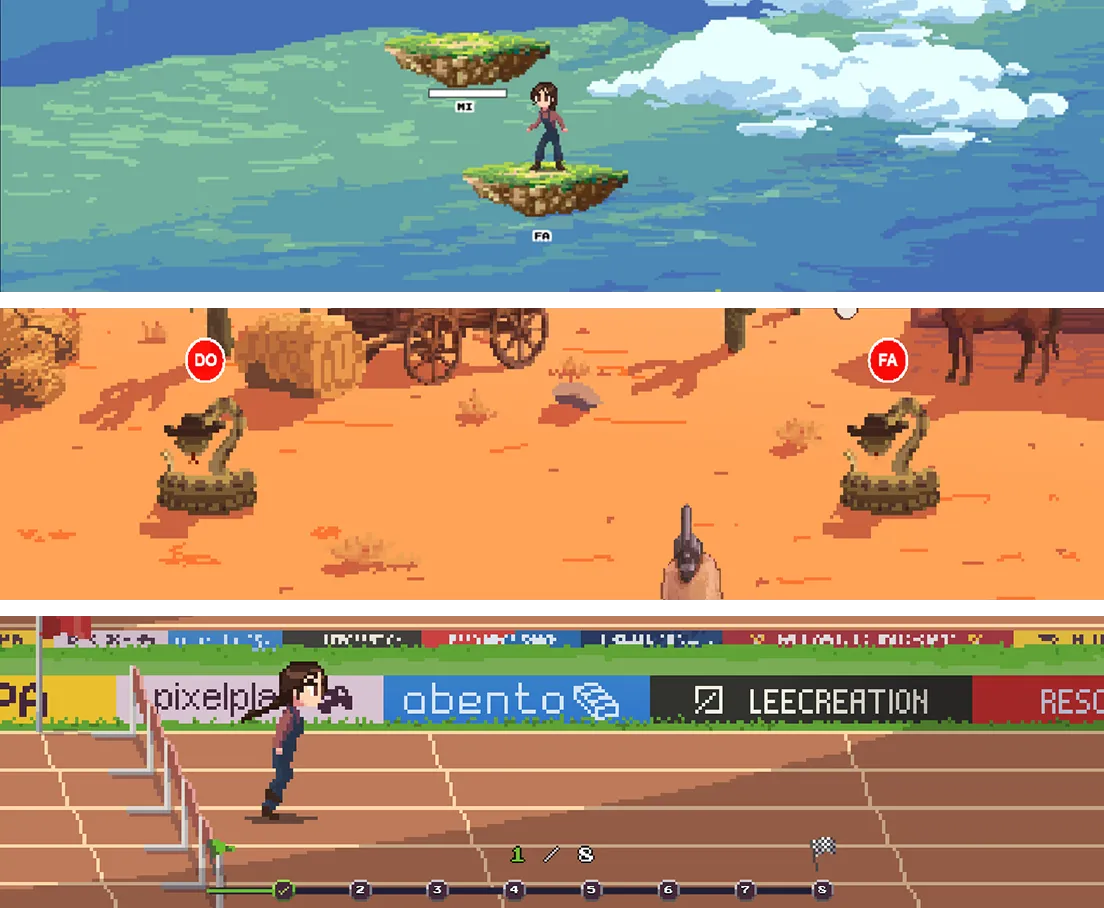
Rhythm, taught at a sprint. Cadence runs and clears hurdle after hurdle, timed to the beat, no singing here, just feel. Miss the timing, and she stumbles; keep it, and the run just feels like it's cutting through the exact pulse of the music behind it.

Jump platform

Jump platform

Melody, taught by singing and moving. Cadence leaps from platform to platform in time with a melody, matching pitch as she goes, each jump landing only if the note does. It's the game that teaches her to actually hear a tune before she can play one back.

Western Harmony Shootout

Western Harmony Shootout

Harmony, taught with a standoff. Cadence sings to take aim, and hitting the right harmony is what feels like the snakes coming at her. Two or more notes have to work together here, not just land correctly on their own, which is the whole point; harmony is about how sounds sit next to each other, not how well any one of them lands alone.

Beat Runner

Beat Runner

Rhythm, taught at a sprint. Cadence runs and clears hurdle after hurdle, timed to the beat, no singing here, just feel. Miss the timing, and she stumbles; keep it, and the run just feels like it's cutting through the exact pulse of the music behind it.

Jump platform

Jump platform

Melody, taught by singing and moving. Cadence leaps from platform to platform in time with a melody, matching pitch as she goes, each jump landing only if the note does. It's the game that teaches her to actually hear a tune before she can play one back.

Not every decision starts with a brief.

Some start with a hallway.

1

The First Idea

The First Idea
Dev

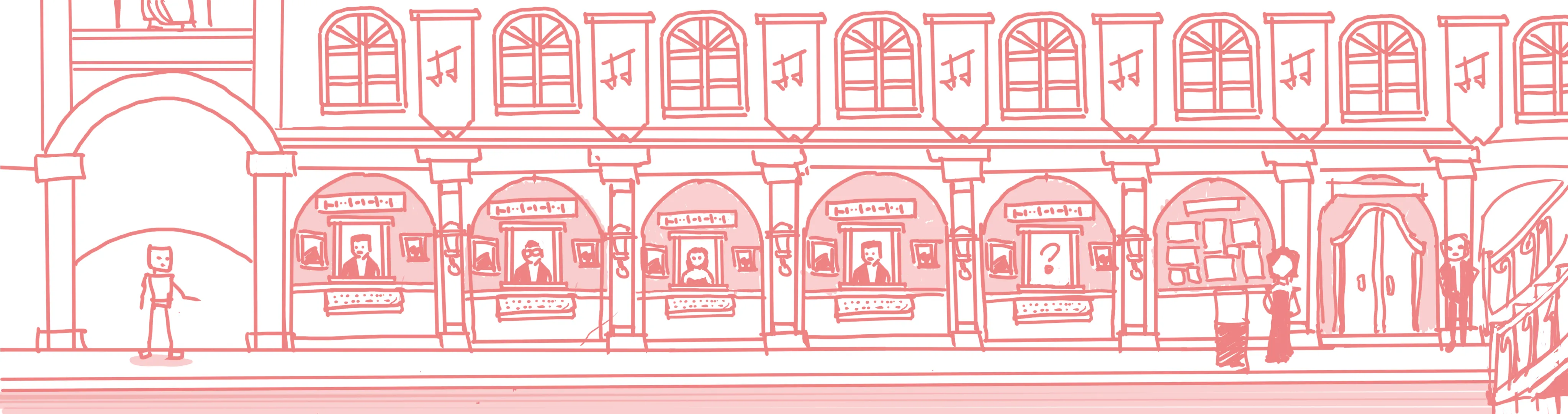
A row of hall-of-fame portraits before the player ever reaches the receptionist, so the Royal Concert Hall feels like it matters before anyone explains why. High ceilings too, the kind you'd expect from a real concert venue, so the grandness isn't just implied; it's built into the room itself.

Keep it grand, but not maintained. Sonata Springs used to be somewhere. This is an old estate that's gone a few years without the renovations it needed.

Musikkspill
3

The Final Evolution

The Final Evolution — run down
The Final Evolution — renovated
Dev

Cadence contributes toward renovating the Royal Concert Hall step by step, slowly shedding its wear a stage at a time.

So she watches it happen, one phase at a time. That works.

Musikkspill
1

The First Idea

The First Idea
Dev

A row of hall-of-fame portraits before the player ever reaches the receptionist, so the Royal Concert Hall feels like it matters before anyone explains why. High ceilings too, the kind you'd expect from a real concert venue, so the grandness isn't just implied; it's built into the room itself.

Keep it grand, but not maintained. Sonata Springs used to be somewhere. This is an old estate that's gone a few years without the renovations it needed.

Musikkspill
2

The World Evolves

The World Evolves
Dev

So the hall stays worn down through the whole story, and only starts coming back once Cadence discovers she's actually inherited it, a twist she doesn't see coming until after the final concert.

That's the stronger version. Gives the postgame an actual reason to exist.

Musikkspill
3

The Final Evolution

The Final Evolution — run down
The Final Evolution — renovated
Dev

Cadence contributes toward renovating the Royal Concert Hall step by step, slowly shedding its wear a stage at a time.

So she watches it happen, one phase at a time. That works.

Musikkspill
1

The First Idea

The First Idea
Dev

A row of hall-of-fame portraits before the player ever reaches the receptionist, so the Royal Concert Hall feels like it matters before anyone explains why. High ceilings too, the kind you'd expect from a real concert venue, so the grandness isn't just implied; it's built into the room itself.

Keep it grand, but not maintained. Sonata Springs used to be somewhere. This is an old estate that's gone a few years without the renovations it needed.

Musikkspill

A game world built to teach real music and hear you play it back

Pitch Quest isn't a quiz app skinned as a game, it's a full RPG campaign with a persistent overworld, and every ear-training exercise had to survive being reframed as gameplay. Each game in the suite, a platformer, a rhythm runner, and a harmony shooter, is built in TypeScript on Phaser 3 for rendering, with native Web Components powering menus and HUDs. All four need real-time pitch or rhythm recognition from a live microphone, so rather than reimplementing that per game, Avinto built one shared Web Audio API core that all four sit on top of: pitch detection listens to the player in real time, while a multi-engine manager runs one detector per target note off a single shared microphone stream, enabling simultaneous chord recognition. The rhythm game parses MusicXML scores directly into drum timelines and plays them back in sync using the Web Audio clock instead of JavaScript timers.

Learning Engine

Custom transcription engine

In-house package parses each piece and grades melody, harmony, and rhythm input against it.

Real music notation

Exercises render as actual staff notation, not a simplified game UI.

Games Suite

Phaser 3 + TypeScript

Platformer, rhythm runner, and harmony shooter built on a shared Phaser 3 rendering engine.

Native Web Components

Menus and HUDs built as framework-free Web Components, shared across every game.

Persistent RPG overworld

Practice rooms, a concert hall, an instrument shop, and more, each tied to a specific ear-training skill.

Audio Recognition Core

Shared Web Audio API engine

One pitch/rhythm recognition core built once and reused across all four games instead of per-game.

Real-time pitch detection

Listens to the player live through the microphone to score pitch accuracy as they play.

Multi-engine chord recognition

Runs one detector per target note off a single shared mic stream, enabling simultaneous chord detection.

MusicXML-driven rhythm engine

Parses scores directly into drum timelines, synced to the Web Audio clock.

Learning Engine

Custom transcription engine

In-house package parses each piece and grades melody, harmony, and rhythm input against it.

Real music notation

Exercises render as actual staff notation, not a simplified game UI.

Games Suite

Phaser 3 + TypeScript

Platformer, rhythm runner, and harmony shooter built on a shared Phaser 3 rendering engine.

Native Web Components

Menus and HUDs built as framework-free Web Components, shared across every game.

Persistent RPG overworld

Practice rooms, a concert hall, an instrument shop, and more, each tied to a specific ear-training skill.

What our client say

“We at Musikkspill would never have gotten to where we are today without Avinto. They've helped us deliver the beta version of our ear-training game, Pitch Quest, and have exceeded our expectations when it comes to both design and game design. We prototype the different components of our game ourselves, while Avinto's developers contribute both creatively and technically to make them engaging and functional. Since we at Musikkspill work under different conditions and a tight schedule, we've come to rely heavily on the local project management Avinto provides. The collaboration between the project managers in Nepal and Norway lets us follow up with the developers in parallel, ensuring a seamless process from start to finish.”

Trygve Rypestol

Trygve Rypestol

Manager, Musikkspill AS
More customer stories

  • Bring Cargo Driver app

    Bring

    Bring is the logistics and freight division of Posten Bring AS, Norway's state-owned postal and logistics group. The division handles B2B delivery, courier services, supply chain management, and international shipping across the Nordic region.

    WebappMobile app
  • Cantilever
A Town Waiting to Be Earned

The Sound She Has to Earn

But first, she has to learn to play. Three challenges stand between Cadence and that stage, each built into the town itself.

Floating platforms that never seem to end, climbed one right note at a time. Snakes that close in until the right harmony brings them down. A rhythm that won't slow down for anyone, only keeps pace with hurdle after hurdle. Clear one, and something comes back: a coin, a fragment of sheet music, a trophy for the apartment walls, a little more of the story filled in.

Clear one, and something in her changes: a note she can finally hit, a piece of the town's story she didn't have before, one step closer to a stage she still isn't sure she's ready for.

Elias left her a town, an apartment full of unplayed music, and a story that only finishes if she picks up an instrument. Sonata Springs is waiting to hear her play.

The Sound She Has to Earn

Cantilever Music

Cantilever is a curated music streaming service for independent music, featuring a hand-picked selection of exceptional albums paired with contextual stories and artist reflections. It was built to give independent artists fairer revenue and listeners a more meaningful way to discover music.

Mobile app